Best Non Stick Non Toxic Frying Pans for Home Cooks
This post may contain affiliate links. Please see my disclosure and privacy policy for more information. As an Amazon associate I earn from qualifying purchases.
When I first began my journey towards nontoxic living, one of the areas I knew I wanted to clean up was my cookware. When I first got married, we got an inexpensive set of pots and pans. I learned pretty quickly on about how easily they flake after a few uses, and then I learned about the dangers of the toxic chemicals flaking off of those non-stick pans. I knew I needed to find a non stick non toxic frying pan set.
Teflon cookware has been popular for several years, but overtime the community at large has learned about the dangers of teflon, so newer non-stick frying pans have been created that offer the benefit of being non-toxic.
So if we are worried about toxins in our cookware, what exactly should we be worried about as home cooks?
What toxic substances are in typical cookware?
Teflon cookware is probably the biggest offender when it comes to toxic materials in non-stick cookware. The nonstick coating in Teflon cookware is made with PTFE, also known as polytetrafluroethylene. It is a unique polymer coating that prevents food from sticking to the pan.
The problem is that even at normal cooking temperatures various gases and toxic fumes that lead to mild to severe toxicity can be emitted. Many cheap pots and pans eventually flake their teflon coating, which means you could be ingesting it with your food. There aren’t many studies that describe the toxicity and health problems of a PTFE coating, so for me that means I would rather avoid it.
Other harmful chemicals you may find in nonstick pans include heavy metals such as lead and cadmium, as well as, PFOA, and PFAS. These chemicals are known as forever chemicals. They are known as endocrine disruptors and possible carcinogens. With so much really unknown about these chemicals in these nonstick skillets, why even take the chance when there are safe options available?
Another commonly used material in non stick frying pans is aluminum. There is a lot of speculation about why aluminum may potentially contribute to certain health concerns, so I would try to avoid it in my frying pans. We do still use aluminum baking sheets, but try to put down parchment paper as a barrier between the sheet and the food. You can’t do that in a frying pan.
Non-Toxic Cookware Options
Let’s chat about the safer options for your cookware that are available on the market.
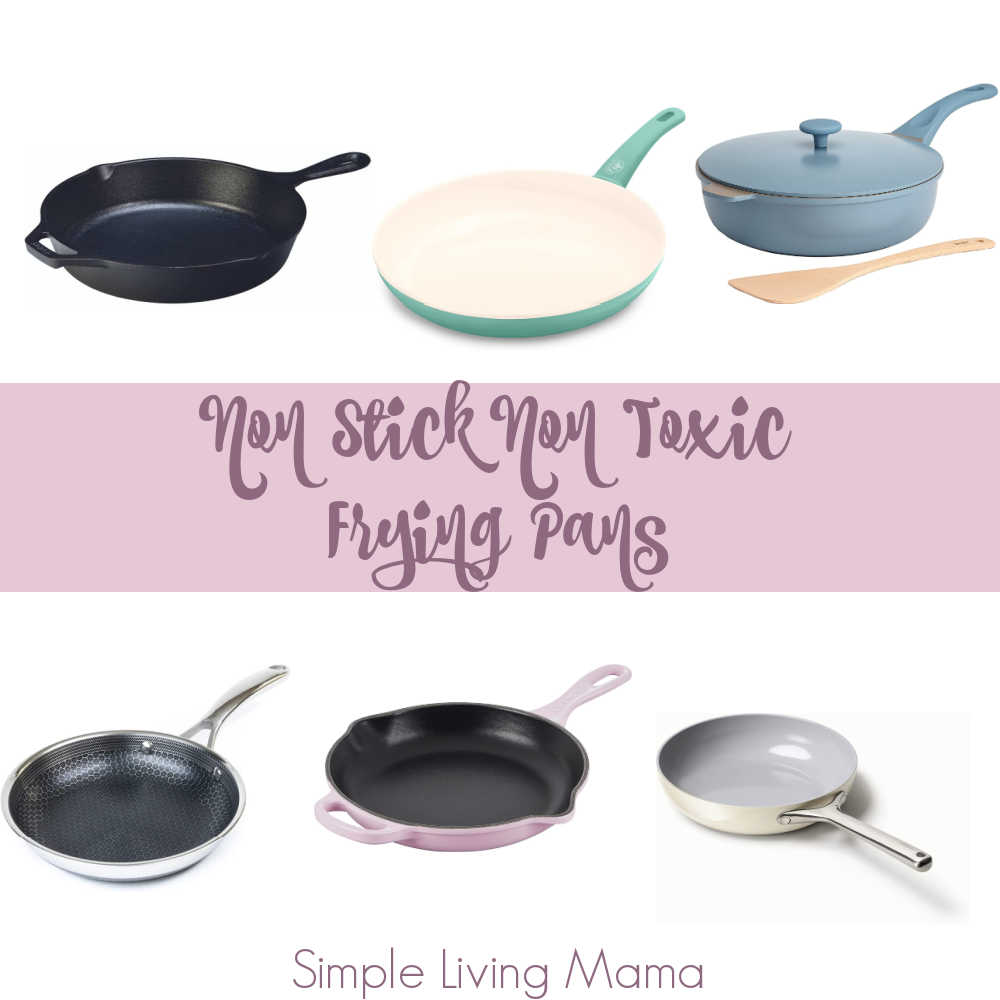
Cast Iron Cookware
Cast iron has been around for well over a hundred years. In order for a cast iron pan to truly be non-stick, it must be seasoned correctly. This is done by coating the pan in cooking oil and heating it at a very high temperature. The oil hardens and the pan becomes non-stick. There are a few things to consider when using cast iron.

Some may find that the iron leaches into their food. Usually a little extra iron in your diet isn’t a bad thing, but it can be for some people. Acidic foods tend to cause the pans to leach the most, so I personally avoid cooking acidic dishes in my cast iron, such as tomato sauce. You may also want to avoid using metal utensils when cooking with cast iron, just so you don’t scratch your seasoning.
There are a lot of benefits to cast iron, too, and I’ll get to those soon.
Enamel-Coated Cast Iron
What about enamel coated cast iron? This cast iron is made with a nonstick ceramic coating. You can find enamel coated cast iron from Lodge and Le Creuset. Le Creuset also makes a ceramic-coated aluminum frying pan.
The problem with enamel, especially brightly coated enamel is high levels of lead and cadmium have been found in those frying pans. My suggestion if wanting to use enameled cast iron is to make sure the pans you purchase have been tested and do not contain those metals.
Ceramic Cookware
Ceramic cookware has gained a lot of popularity over the years because of its non stick properties. Ceramic is naturally slick and non-stick, which is why the brands I mentioned above will coat their frying pans with it. It is also a great heat conductor, so you know your frying pan will heat evenly.
That being said, it is important to choose your new cookware carefully, and only select brands that prove they have been tested to be free of PFOAs, PFASs, lead, and cadmium. The two ceramic pans listed below are high quality, non-stick cookware brands and pride themselves on their non toxic properties.
Always Pan
The Our Place Always Pan has become a popular choice because it boasts being a 10-in-one cookware system. Both deep enough to roast a chicken and shallow enough to flip an egg, it seems to be a decent choice. They claim,
“Our nonstick ceramic coating is made without potentially toxic materials like PFAS (including PTFEs and PFOAs), lead and cadmium.”
The Always Pan 2.0 is made with Thermakind, which is their exclusive ceramic coating that is made to be 50% longer lasting. I would definitely love to see some 3rd party testing to see what makes their ceramic coating so long lasting.
As for the care of the Always Pan, there are definitely some restrictions in place. They claim to be oven safe up to 450 degree Fahrenheit, but they also recommend cooking only at low to moderate heat to preserve the nonstick coating. Never heat an empty pan, hand wash only, never use metal utensils, do not clean the pan with anything abrasive, and do not use any aerosol cooking sprays.
I think hand washing is going to be the gold standard for most nonstick pots and pans. You definitely want to avoid scratching scratching ceramic nonstick surfaces, and never run a hot pan under cold water or the pan may break.
Caraway Fry Pan

The Caraway Fry Pan is made similarly to the Always Pan. Caraway specifically states their cookware is 100% non-toxic. The believe their frying pan is superior to other non-stick pans because it is less prone to chipping and its non-stick properties are higher in quality, which means there is less scrubbing when it’s time to clean.

Caraway cookware comes in a variety of beautiful colors to complement any kitchen and they’ll even send you the reports on the safety of their cookware if you ask for them.
The Best Nonstick Pan
When it comes to choosing the best nonstick pan, I choose two different types of cookware. When it comes to high heat and going from the stovetop to the oven, I choose my cast iron skillet every time. When I need a frying pan or a saute pan for acidic dishes, I choose stainless steel cookware.

Nonstick Cookware for High Temperatures

I love the versatility of my cast iron. I love a cast iron dutch oven for making soups, stews, and sourdough bread, and I love my cast iron skillet for everything from frying eggs (yep), cooking baking, and even for making a delicious cast iron skillet cookie dessert!

Yes, you can cook eggs in your cast iron skillet. As I mentioned previously, you need to have a good seasoning on your pan for it to truly be nonstick. My Lodge 10.5 inch cast iron skillet is 10 years old and perfect for scrambling eggs. I also use the much larger 15 inch cast iron skillet to dish up delicious large family meals!
If you’re new to cast iron, check out my Cast Iron 101 post to learn more.
Stainless Steel Pans
In order to get a truly nontoxic frying pan, the best option is stainless steel simply because you don’t have to worry about any toxins leaching from the pan into your food.
Stainless steel has been around for a long time, and it will last a long time if you care for it correctly. I am slowly replacing some of my ceramic coated frying pans with stainless steel.
Did you know that a stainless still pan can be nonstick? Yep, try this little tutorial to make sure your food doesn’t stick.
I really love the All Clad stainless steel pots and pans.
I think people are intimidated by both stainless steel and cast iron because of the care and the cost. If you want a truly nontoxic frying pan, you are going to want to invest in quality and also learn how to care for it properly to ensure that it lasts.
No matter which option you choose for a non-toxic frying pan, there are a lot of great choices available to you so you can put the worry away about what you’re using to cook your family’s food.
More Non-Toxic Living Posts
Are you looking for more ideas to make your home as nontoxic as possible? Check out the posts below: